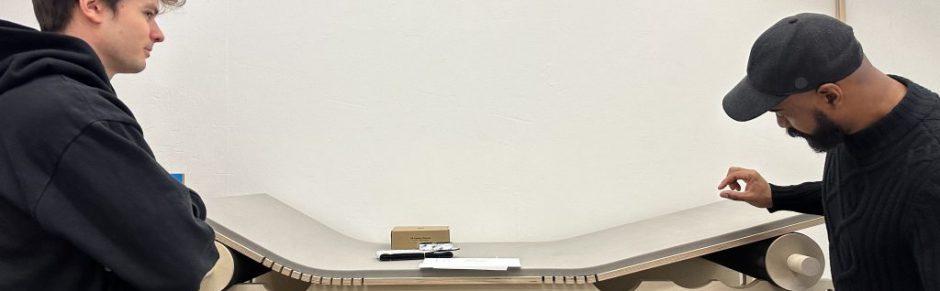
Reflection on: Object-Based Learning Microteaching Session
The microteaching session on object-based learning provided a meaningful exploration into using tangible objects as tools to deepen student learning (Schultz, 2012). I chose the OXO Good Grips Garlic Crusher due to its relevance in everyday life and as a strong example of inclusive design. My aim was to create an engaging, tactile experience that fostered observational skills, critical analysis, and personal reflection among the participants.
The initial activity, where participants handled the concealed garlic crusher, successfully sparked curiosity and encouraged participants to engage deeply through tactile sensation alone. The diversity of their guesses—ranging from a stapler to a metal tool—highlighted how tactile interaction alone can prompt creative and varied interpretations, enhancing visual literacy and observational skills. This exercise effectively set the stage for an in-depth discussion once the object was revealed.
Introducing the story of OXO Good Grips helped contextualize the concept of universal and inclusive design (Clarkson et al., 2015). Sharing the backstory of Sam Farber and his wife’s struggle illustrated the practical significance of empathy in design. This narrative approach resonated with participants, prompting a thoughtful discussion about the usability, comfort, and design intent behind everyday objects, and encouraged participants to reflect on the broader implications of inclusive design practices.
Participants actively discussed the materiality and functionality of the garlic crusher, which underscored how direct interaction with objects could reveal design considerations not immediately evident through visual inspection alone. Issues such as usability, maintenance, and cleaning difficulties led participants to critically evaluate how design choices impact real-world usage and satisfaction.
The storytelling component proved particularly effective in engaging the group on a more personal level. Sharing personal experiences related to garlic or cooking enabled participants to connect emotionally and practically with the object, demonstrating how everyday items can foster a shared understanding and community building. This approach emphasized how object-based learning can create space for deeper connections beyond mere technical or analytical discussions.
Reflecting on the session, I observed that facilitating tactile exploration significantly enhanced participants’ engagement and analytical depth. It demonstrated that students can gain a nuanced understanding of objects through physical interaction, fostering a richer, multi-dimensional learning experience. Furthermore, the personal storytelling segment illustrated how integrating narrative elements can transform learning from passive absorption to active participation, leading to meaningful reflections on broader themes such as inclusive design.
Moving forward, I plan to incorporate similar object-based, narrative-driven learning activities into my teaching practice regularly. These methods effectively support diverse learners by offering multiple entry points into the material, accommodating varied learning styles, and emphasizing inclusivity.
References:
Clarkson, J., Coleman, R., Keates, S., and Lebbon, C., eds. (2015). Inclusive Design: Design for the Whole Population. Springer-Verlag.
Schultz, L., (2012). Object-based learning, or learning from objects in the anthropology museum. Review of Education, Pedagogy, and Cultural Studies, 34(2), pp.161-185.