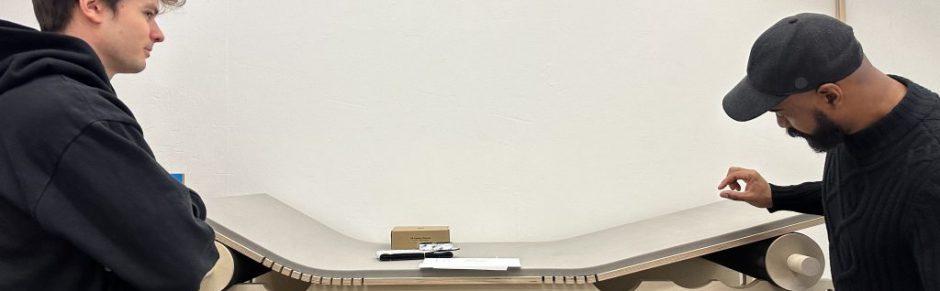
Higher education is constantly evolving, as is the world around it. As an educator, I want to enhance my teaching practice by engaging with theories, policies, and research-driven approaches to pedagogy. The PgCert will give me the space to reflect critically on my teaching, explore inclusive and innovative educational strategies, and, ultimately, improve the student experience in my field.
I am particularly interested in:
How policies in higher education shape teaching practices in creative disciplines.
Exploring ways to integrate more inclusive, student-centred learning experiences, in particular for students with neurodivergent and financially disadvantaged backgrounds.
Developing more effective assessment and feedback strategies for design students that evolve with the environment in which learning happens.
Engaging in research-led teaching methods to enrich the curriculum.
My Teaching Philosophy
At the core of my teaching is the belief that design education should be responsive, student-centred, and research-driven. I see my role as a facilitator of learning, helping students build confidence, navigate complex problem-solving, and develop their personal design practices and identities.
My key teaching principles are:
Encouraging inquiry and critical thinking – Design students should be encouraged to question, iterate, and reflect on their work as an ongoing process during their studies and beyond throughout their careers.
Creating a flexible, supportive and inclusive learning experience – Students thrive when they feel and are heard, valued, and empowered to express diverse perspectives.
Balancing structure with creative exploration – While providing clear learning frameworks, I encourage students to take risks and embrace ambiguity in their design processes.
Developing real-world connections – I emphasize the role of design in real-world contexts, ensuring that students engage with relevant industry challenges and human-centred approaches.
What I Hope to Gain from the PgCert
Through this course, I want to:
Deepen my understanding of pedagogy and how it applies to design education.
Engage in critical reflection on my teaching methods.
Explore new strategies for curriculum development, assessment, and feedback.
Collaborate with peers to share best teaching and learning practices and develop a strong community of practice.
This blog will be a reflective space where I will document my learning, engage with course readings, and explore how my teaching evolves throughout the PgCert. I look forward to challenging my assumptions, testing new approaches, and growing as an educator.
What Next?
Reflect on my current strengths and areas for growth as an educator.
Read and engage with key theories in higher education.
Begin gathering examples of my teaching practice for case studies and peer reviews.
I’m excited to start this journey, and I look forward to sharing my reflections and learning from my peers along the way.
Blog Post 9 – Evaluation, limitations and the next action-research cycle
What changes in my practice
The project was started because of a practical issue—although the feedback given on the forum was plentiful it was only temporary, whereas the written material available to the students had decreased as a result of teaching shifting from using identical notes to relying on trackers directed at tutors. The current body of evidence points to a more specific answer than just ‘record the critique’. The most positive outcome was clarity: of the 14 respondents, 11 (79%) either agreed or strongly agreed that the method had made it clearer to them about what they should do next. The overall trend was less clear—8 out of 13 (62%) said that their learning experience had improved, while both the reduction in note-taking and the peer learning that took place through chat were reported by 7 out of 13 (54%). I thus see the intervention as promising but conditional, not as a general solution.
The most significant change I will make to my practice will be to organise the relationship between formative and summative assessment in a feed-forward manner not around the accumulation of transcripts. Following each forum, the student should receive a brief, tutor-verified summary outlining what has progressed, the two or three most important points of feedback, specific steps to take next and the evidence that should be brought back. While a transcript may assist in this process, it must not serve as the official record of the student’s participation or take the place of the actual interaction. Any organisation of my own notes that involves the use of AI must still be subject to human verification, and summative judgement must continue to be based on the work that is submitted and the published learning outcomes.
Limitations of this cycle
The project does have certain limitations. Since it was a small-scale study carried out in my own class, my dual role could have affected both the way people took part and the way I interpreted the results. The denominator figures differed from question to question, the number of people in the leadership sample was only two, and the project looked at people’s perceptions rather than at any changes in achievement or the quality of subsequent design decisions. Moreover, automated transcripts are also capable of misidentifying speakers and specialist terminology. For these reasons I am unable to assert that transcription reduces bias, leads to higher grades, or results in more accurate feedback without carrying out further comparative research.
Next-cycle experiments
The two observations made on the Test Forum day will be developed into full-scale experiments in the following cycle. Firstly, it seemed that putting the phones openly on the table had the effect of reducing distraction, and as a result I intend to carry out a co-designed ‘visible device’ protocol in which the phones can also provide declared accessibility features such as translation or note taking. However, personal recording is not authorised in this context since recording will still need to be approved explicitly. Secondly, a student showed me how PowerPoint Live slide translation works via Teams. Although I saw the feature I did not assess it; a future pilot study should examine the technical reliability, comprehension, student preference and compliance with institutional language policies before any conclusions are drawn.
A proposed feedback ecology
The feedback ecosystem will therefore be the focus of the next action research cycle rather than the addition of technology: this will involve establishing clear ground rules, offering a variety of ways of participating, securing ongoing consent, providing captions or transcripts where appropriate, ensuring that feed-forward is verified by tutors, and allowing for a meaningful opt-out. Moreover, I intend to gather evidence regarding actual use rather than just the availability of transcripts—specifically, whether students return to the records, what actions they take afterwards, and if those actions can be seen in their later work. In this way, the project shifts from asking whether a transcript is helpful to asking how students turn feedback into learning.
Reflexive conclusion
In my view, the project has altered the way I think about inclusion. It isn’t sufficient just to provide every student with the same digital tool; instead, it is necessary to build in a certain level of flexibility so that students can take part in different ways without having to settle for a less satisfactory educational experience. Nowadays, that principle seems more important than the technology itself and provides the following cycle with a more definite pedagogic and ethical focus.
References
Braun, V. and Clarke, V. (2022) Thematic Analysis: A Practical Guide. London: SAGE.
University of the Arts London (UAL) (2024) Supporting Inclusive and Developmental Crits: Guidance forStaff. London: UAL.
British Educational Research Association (BERA) (2024) Ethical Guidelines for Educational Research. 5th edn. London: BERA.
Student Questionnaire (2026) Action Research Project questionnaire responses. Unpublished research dataset.
White, D. (2025) Interview concerning AI-supported transcription, feedback and accessibility. Interviewed by Adrian Allen, 20 November. Unpublished transcript.
Chow, S. (2025; 2026) Interviews concerning AI policy, consent and inclusive participation. Unpublished transcripts.
Drage, E. (2026) Interview concerning AI ethics, consent and educational practice. Unpublished transcript. Gunasekera, P. (2026) Interview concerning online Academic Support and multimodal participation. Unpublished transcript.
Boud, D. & Carless, D. (2018). Feedback literacy: Understanding students’ engagement with feedback. Stud. High. Educ. Fraser, N. (2005). Reframing justice in a globalising world. New Left Review, 36. Joseph-Richard, P. et al. (2020). Challenges and benefits of the flipped classroom in HE – a case with lecture capture. Int. J. Educ. Tech. High. Educ. Kemmis, S. & McTaggart, R. (2000). Participatory Action Research. In Denzin & Lincoln (Eds.), Handbook of Qualitative Research. Orr, S. & Shreeve, A. (2017) Art and Design Pedagogy. Routledge Salmon, G. (2019). May the Fourth Be with You: Creating Education 4.0. J. Learn. Dev. UAL (2024) Inclusive and Developmental Crits – Guidance. UAL, London. BERA (2024) Ethical Guidelines for Educational Research. British Educational Research Association. SRA (2021) Research Ethics Guidance. Social Research Association (Additional references and all primary data sources are detailed within the project blogs and appendices.)
Inclusive and Developmental Crits-Guidance-Sep-2024.pdf
Creative Research Methods and Ethics – Kara 2015.pdf
BERA Ethical-Guidelines-for-Educational-Research-5th-edition 2024.pdf
SRA Research Ethics guidance – 2021.pdf
Cultural Safety in Participatory Arts-Based Research – Lenette 2022.pdf
Braun and Clarke Thematic Analysis – How to do the six-step process in your qualitative research project
Blog Post 8 – Expert challenge, triangulation and implications for feedback practice
Critical Experts and Practitioners- purpose
The interviews with David White, Sheldon Chow, Dr Eleanor Drage, and Pras Gunasekera provided more critical feedback than direct validation of the intervention. These conversations surfaced significant questions about agency, consent, and responsibility when formative dialogue is converted into recorded data.
Bias, accessibility and evidence boundaries
David White challenged the binary framing of bias between humans and technology, stating, ‘Everything’s biased. But which one’s less biased, right?’ (White, 2025, 0:49). He also noted the absence of evidence supporting claims that AI generates a ‘better version’ of feedback notes in this project (White, 2025, 6:06). This underscores a key evidence boundary. While I can discuss the selectivity of tutor notes and the potential comprehensiveness of transcripts, I cannot claim that AI is more objective without a structured comparison. White also recommended clearly distinguishing between research findings and implementation issues, warning that practical challenges should not be presented as research conclusions.
Responsible use and human verification
Sheldon Chow placed the project within a broader ethical context, highlighting the importance of considering ‘climate justice, data justice, and something of social justice’ when deploying AI-assisted tools (Chow, 2025, 0:49). He also raised a practical issue regarding inclusivity in the proposed opt-out mechanism, observing that ‘not everyone types quickly’ (Chow, 2026, 7:30). This indicates that a system dependent solely on typing may unintentionally exclude some participants. Therefore, for future forums, I should provide alternative options that promote equitable participation, such as enabling recordings to be paused or offering unrecorded follow-ups, rather than assuming universal access to chat functions.
Consent, equality and multimodal participation
Dr Eleanor Drage stressed that ‘consent has no value unless equality is ensured’ (Drage, 2026, 3:05). She also cautioned against resolving challenges by introducing more AI solutions, as this could create additional complications (Drage, 2026, 8:27). In response, I redirected my focus in the next cycle from adding new features to critically assessing which barriers each feature was designed to address. I also recognized that consent should be regarded as a continuous process, not merely a one-time event at the beginning of the study.
Pras Gunasekera turned the discussion towards the practical aspects of the students’ experience, supporting the idea of ‘a multimodal, if you like, offering’ (Gunasekera, 2026, 15:54), at the same time recognising that physical studio teaching will always remain important. His interview also acted as an ethical reminder. When he saw the video recording, he said, ‘Do not use the video’ (Gunasekera, 2026, 13:24). As a result, I used the transcript as my research data but did not include his image in any of the presentation materials. This situation further strengthened my belief that consent is both flexible and dependent on context, depending on the kind of data in question.
Implications for feedback practice
Taken together, the interviews show that a limited form of AI-assisted feedback is possible: this entails using technology to record, organise or improve access to the tutor’s formative comments; making sure that any summary is checked by the tutor before it is provided to the students; maintaining an acceptable alternative route which does not make use of AI; and at the same time keeping human responsibility for academic decisions. The practical step that should be taken should be the creation of a short tutor-verified feed-forward summary—covering progress, key feedback, next steps and the evidence to bring back—rather than automatic grading or the offering of summative feedback which has not been reviewed.
References
D. White, 2025: an interview concerning AI-assisted transcription, feedback and accessibility. Interviewer: Adrian Allen, 20 November. Unpublished transcript.
S. Chow’s interview on the UAL AI policy, feedback and responsible use, conducted by Adrian Allen on 20 November, is an unpublished transcript.
S. Chow, 2026: a follow-up interview carried out on the subject of consent, opt-out arrangements and inclusive participation. Conducted by Adrian Allen on 3 February. Unpublished transcript.
E. Drage, 2026: an interview concerning the ethics of AI, consent and educational practice. Interviewed by Adrian Allen on 3 February. Unpublished transcript.
P. Gunasekera, interview in 2026 on online academic support, multimodal participation and student access. Interviewer: Adrian Allen, 5th February. Unpublished transcript.
The fifth edition of the Ethical Guidelines for Educational Research, published in 2024 by the British Educational Research Association (BERA), was released in London by BERA.
Freire, P. (1970). Pedagogy of the Oppressed. (re: dialogic education) CAST (2018) UDL Guidelines, Version 2.2. (re: multiple means for engagement) PgCert ARP Unit Guide (2025) – Learning Outcomes. Student and Staff Data (2025) – ARP Project findings (see Blogs 5-7 for detailed sources). UAL (2024) Inclusive Crits Guidance – (reiterating importance of feedback capture and choice).
Blog Post 7 – From codes to patterns of shared meaning
Analytical approach
I carried out a reflexive thematic analysis (RTA) as suggested by Braun and Clarke on the questionnaires, four of the transcripts from the Test Forum, and the interviews with staff and experts. It is necessary to make clear that themes are not merely the topics that are mentioned most frequently; rather, they are interpretive patterns based on shared meaning around particular concepts, which are developed as a result of the researcher’s active interaction with the dataset (Braun and Clarke, 2022). In this instance, I employed descriptive statistics in order to provide a context for the qualitative material, but I did not use them to rank the themes in terms of importance.
Corrected quantitative frame
The quantitative basis offered by the data from the revised questionnaire was useful. Of the students surveyed, 8 out of 13 (62%) said that the intervention had improved their learning experience; 11 out of 14 (79%) stated that they had greater clarity regarding their next steps; 7 out of 13 (54%) claimed that it had reduced their need to take notes; and 7 out of 13 (54%) agreed that the shared chat had supported peer learning. The questionnaire filled out by the senior leaders had a much smaller sample size (n=2): both of them agreed that the transcripts could enhance transparency and equity of access, but only one agreed that the transcripts should be regarded as an accessibility aid rather than an official record. These figures are purely descriptive and must not be generalised beyond this small project dataset.
Patterns of shared meaning
Out of the qualitative data I spotted six themes that were related. The first was that feedback is only worthwhile if it can be put into practice; the transcripts acted more as a source for deciding what to do next than as a kind of record. The second point was that access improves if participation can be offered through a variety of methods, for example by speaking, using captions, chatting, and attending online. Third, greater visibility led to a conflict between inclusion and trust, since recording helped some students to remember but made others more self-conscious. Fourth, the ethical value relied on consent, restricted use of the data and having human verification. Fifth, the intervention worked best when it shifted the focus back to teaching, so that the tutors could work with the students’ work and examples rather than keep taking notes. Sixth, permanent change could only be achieved by incorporating the intervention into the institution’s regular routines rather than depending on individual enthusiasm for technology.
This method is in keeping with accessibility guidelines and increases the transparency of the analysis. Throughout the analysis, I kept switching between the coded sections, the full transcripts, and the research question, adjusting the theme names when they were based solely on topics. The analysis was not designed to achieve inter-rater reliability, and I do not assert that my coding was objective. The fact that I acted as both tutor and researcher had an effect on both my observations and my interpretations.
What the analysis supports
The main result of the analysis is not a general approval of the practice of recording. On the contrary, the findings indicate that a record of feedback that can be revisited can improve clarity and access, on the condition that it stays optional, appropriate, transparent, and secondary to the actual human feedback relationship. It was this interpretation that guided the subsequent critical-friend interviews.
References
Braun, V. and Clarke, V. (2022) Thematic Analysis: A Practical Guide. London: SAGE.
Student Questionnaire (2026) Action Research Project questionnaire responses. Unpublished research dataset.
Tutor Questionnaire (2026) Action Research Project questionnaire responses. Unpublished research
dataset.
Senior Leadership Questionnaire (2026) Action Research Project questionnaire responses. Unpublished research dataset.
Inclusive Pedagogy Literature – e.g., Hooks, B. (1994) Teaching to Transgress. (connection to Theme 3)
Student F, Survey response (2025) – on transcript use for clarity (data extract)
Dean Interview (2025) – on policy needs (data extract).
Inclusive Pedagogy Literature – e.g., Hooks, B. (1994) Teaching to Transgress.
Blog Post 6 – Action, observation and immediate reflexive learning
Intervention and context
In the practical stage of this Action Research Project, it was investigated whether the feedback obtained from the BA Product and Industrial Design forum sessions could be made easier to access and more usable without in anyway replacing the live discussion which is what gives the forum its value. On 18 November 2025 I organised four in person forum groups using Microsoft Teams so that the spoken discussions could be captioned and recorded while the students presented their work in the room. The intervention maintained the original group-crit format: the students presented their research, prototypes and project decisions; their peers and I gave our responses; and the discussion stayed formative. The only difference was that the conversation also left a trace which could be revisited.
This was important since my workflow after the pandemic had become more oriented towards tutoring. The notes were generally input into an Excel spreadsheet and later appeared as part of the summative feedback. At the same time, students were required to listen, give presentations and take their own notes in the course of rapid discussions. The guidance provided by UAL on inclusive and developmental criticism stresses the need to create conditions in which students can take part, understand the feedback and build up their confidence. The test examined whether having a separate written record could lessen the pressure on students to capture everything in real time while at the same time maintaining the social and material aspects of the studio forum (UAL, 2024).
Immediate reflexive learning
The intervention also brought to light some practical difficulties. Having several devices in the same room led to problems with audio and microphone control, and the screens tended to be a distraction. In the subsequent forum sessions I asked the students to put their phones clearly onto the table. This was initially done to reduce scrolling and promote greater attention. However, upon reflecting on what had happened, I realised that the rule about visible devices might also give legitimacy to assistive uses such as translation or taking personal notes. I regard this as an observation made by someone with practical experience and as a suggestion for the next cycle, not as a research finding: the effect had not been measured independently. If personal recording is to be used in the future it will have to be with the explicit consent of individuals and within a well-defined institutional protocol.
Feed-forward observations for the next cycle
Another feed-forward insight arose when a student showed me how PowerPoint Live translation works through Teams. Although I saw the function in action, I did not examine its reliability, its impact on learning, or the policy issues it raises in this study, so it is not included among the findings. The thing that did change was my view of the intervention: accessibility is not a single feature but an ecosystem of optional modes—such as speech, captions, transcript, chat, visual work, and possibly individual translation. In the following cycle, these options should be tested deliberately rather than simply assume that more technology will lead to greater inclusion.
Methodological implication
The most significant immediate lesson was both methodological and pedagogical in nature. The intervention proved most effective when the technology was allowed to take a back seat, so that more attention could be paid to the student’s work and open, transparent discussions could continue rather than become the focus of the session. This insight later influenced the thematic analysis and the expert interviews, which on several occasions addressed the issues of agency, consent, accuracy, and the distinction between giving supportive feedback and automating academic judgement.
Forum Process
Live discussion-> Captions or transcript- > Student Reflection-> Next project action.
References
University of the Arts London (UAL) (2024) Supporting Inclusive and Developmental Crits: Guidance for Staff. London: UAL. Allen, A. (2025).
Student Test Forum transcripts, 18 November 2025. Unpublished Action Research Project data.
British Educational Research Association (BERA) (2024). Ethical Guidelines for Educational Research. 5th edn.
London: BERA.Tutor Interview – Pras G. (2026) Follow-up on Online Forums 29 (transcript excerpt).Leadership Questionnaire (2025) –
Dean responses on risk & equity.Leadership Interview – Dean S.C. (2025) (transcript excerpts on consent).
Drage, E. (2026) Personal Interview on AI and Education.UAL Policy Team (2026) Draft
Guidelines for Recording Teaching Sessions (in development).
Tutor Interview – Pras G. (2026) Follow-up on Online Forums (transcript excerpt).
Leadership Questionnaire (2025) – Dean responses on risk & equity.
Leadership Interview – Dean S.C. (2025) (transcript excerpts on consent).
Drage, E. (2026) Personal Interview on AI and Education.
UAL Policy Team (2026) Draft Guidelines for Recording Teaching Sessions (in development).
Implementation, Data Collection, and Initial Reflexive Observations
Test Forum Implementation
On 18 November 2025 I carried out the intervention in four forum groups in person. As has been the case in the usual formative way, the students stayed physically together, showed their developing work and received feedback from both the tutors and their fellow students. At the same time Microsoft Teams was used so that the spoken discussion could produce real-time captions and a transcript. This was important from a methodological standpoint since I was not replacing the forum with an online activity but was instead adding a digital record to the existing studio practice.
What I documented
The intervention produced a variety of data, including the four forum transcripts, the responses to the questionnaire and my personal observations of the process. I made screenshots and photographs in order to keep a record of the practical setup. These records served as evidence of how the intervention worked in real circumstances, illustrating the kind of usual problems that occur with devices, microphones, screens and taking turns. I considered the practical elements to be an integral part of the research rather than something irrelevant, since a workflow which is technically inconvenient or distracting is unlikely to developinto a sustainable teaching practice.
Early reflexive observations
Two observations provided useful starting points for the cycle in question, even though I am not considering either of them as a finding. The first of these was that at the beginning of the experiment I had asked the students to place their phones visibly on the table in order to reduce scrolling and make attention more apparent. However, on reflection I wondered whether a rule requiring devices to be visible might also have had the effect of normalising the declaration of assistive functions such as translation or taking personal notes. Since I had not measured this effect, it remains a practitioner hypothesis.
The second observation was when a student demonstrated the PowerPoint Live translation feature through Teams. I was able to see the feature in operation, but I did not evaluate its reliability, the impact it had on learning or the policy implications it might have in this study. It must therefore be dealt with in future practice rather than being included in the findings.
Preparing for analysis
The phase in which the data were collected altered the focus of the project. At the start I asked whether recording and transcribing could preserve feedback; by the time the implementation was completed I was posing a more conditional question—that is, under what circumstances does a record which can be revisited actually improve access without leading to greater surveillance, distraction or workload? This change in direction influenced the later analysis of the questionnaire, the formulation of the interview questions and the thematic work. It also enabled me to distinguish three things which had earlier been confused: what the intervention in fact produced, how I interpreted those observations, and what I wished to test next.
References
Allen, A. (2025) Student Test Forum transcripts, 18 November 2025. Unpublished Action Research Project data.
University of the Arts London (UAL) (2024) Supporting Inclusive and Developmental Crits: Guidance for Staff. London: UAL.
British Educational Research Association (BERA) (2024) Ethical Guidelines for Educational Research. 5th edn. London: BERA.
Braun, V. and Clarke, V. (2022) Thematic Analysis: A Practical Guide. London: SAGE.
Focus Group Debrief Transcript (2025) – Students on recording comfort (unpublished ARP data).
Braun & Clarke (2006) – Thematic analysis method (for coding students’ open comments). UAL (2024) Inclusive Crits Guidance – emphasis on student agency and safety.
How the research design developed around consent, feasibility and triangulation
Research design and methods
I structured the project as a small-scale practitioner action-research cycle that incorporated both qualitative and descriptive quantitative methods. The main intervention involved conducting four in-person forum groups via Microsoft Teams in such a way that the live discussions could be captioned and recorded while the students kept on presenting their work in the room. I obtained students’ views on aspects such as their learning, the clarity of the material, note-taking, peer learning and comfort through questionnaires; collected the staff’s opinions using questionnaires from tutors and senior leaders; and carried out semi-structured interviews with colleagues and critical friends in order to examine issues relating to policy, ethics, inclusion and the practical implementation of the approach. The transcripts from the four forum sessions also served as qualitative data in themselves.
Why mixed methods
This setup enabled me to compare various kinds of evidence rather than considering one source as being definitive. The questionnaires gave a descriptive overview, whereas the transcripts and interviews supplied the relevant context, tensions and explanations that percentages on their own could not. For carrying out the later analysis I used Braun and Clarke’s reflexive thematic analysis, shifting between the coded extracts, the entire datasets and the research question rather than viewing the themes as simple frequency counts (Braun and Clarke, 2022).
Ethics and consent
The fact that I had recorded the early conversations presented me with a more complicated ethical issue than I had first thought, since I was acting both as a tutor and as a researcher. Although I had used the participants’ information and consent forms, the interviews later led me to view consent as an ongoing relationship rather than something that only needs to be given once. Dr Eleanor Drage expressed this idea very clearly when she said: “consent is something that has to be kind of repeatedly given, but also consent is meaningless without equality” (Drage, 2026, 3:05–4:10). As a result, my understanding of opt-out options changed so that refusing to record should not lead to a less good educational experience.
Boundaries of the intervention
The study therefore stayed within a supportive and developmental range. The captions and transcripts provided support in terms of access, recall and reflection; they were not regarded as official assessment records or used as a replacement for academic judgement. Moreover, I grew more careful regarding data minimisation, storage and the use of external tools. The design increasingly concentrated on employing the least intrusive method that dealt with a specific pedagogic barrier, with human verification and the responsibility of the tutor remaining at the heart of the approach.
Suggested visual
References
Braun, V. and Clarke, V. (2022) Thematic Analysis: A Practical Guide. London: SAGE.
British Educational Research Association (BERA) (2024) Ethical Guidelines for Educational Research. 5th edn. London: BERA.Drage, E. (2026) Interview concerning AI ethics, consent and educational practice. Interviewed by Adrian Allen, 3 February. Unpublished transcript. Social Research Association (SRA) (2021) Research Ethics Guidance. London: SRA. UAL (2024) Crits Guidance – Ground Rules and Voices. Microsoft (2023) Microsoft Teams Live Captioning – Technical Documentation. (For general reference on functionality) Forum 1 Transcript (2025) – Extract of discussion on spatial design project. Forum 2 Transcript (2025) – Observation notes on caption outage. (unpublished ARP data) Student Survey (2025) – ARP Student Questionnaire responses.
Context, social-justice rationale and development of the inquiry
Context and rationale
The initial situation was a practical issue concerning BA Product and Industrial Design: even though the feedback on the forum is usually plentiful, quick, and conversational, the record that the students can consult later is uneven. During studio sessions, the students give presentations, listen to one another and to the tutors, and respond immediately, but it is best for them to take their own notes. In my current system, there is a heavy dependence on the notes made by the tutors, which are kept in a tracker. As a result, a great deal of the early-stage discussion stays temporary or is only directed at the tutors and therefore, does not become a resource that the students can refer to later in the project.
Social-justice focus
I realised that the issue went beyond efficiency. A feedback culture which depends mainly on verbal interaction can lead to unequal access for students who process language at different speeds, who use English as an additional language, who are neurodivergent, who are absent or are working from home for valid reasons, or who simply have difficulty in listening, presenting and writing at the same time. Since UAL’s advice on inclusive and developmental criticism stresses participation, confidence, choice and the importance of setting up situations in which students can understand and make use of feedback (UAL, 2024), my attention then moved from an aim of giving more feedback to considering how the current kind of dialogue might be made more accessible without losing the social, material and peer-learning benefits of the forum.
Developing the research question
The area that I chose to look into was whether recordings and transcriptions of forum discussions—along with the real-time captions and notes prepared by the tutors and their peers—would enable students to understand, go over and act on formative feedback as they carried out their project. Intentionally, I posed this as an action research question rather than one designed to check whether the technology was ‘better’. It was important that the intervention should be rooted in actual teaching practice and be open to modification as ethical and practical problems arose.
Reflexive position
It would be a mistake to see myself as an outsider, since I was the one who designed the intervention, conducted the forums, and had a professional interest in improving both the quality of the feedback and the quantity of work required to record it. The role has given me a deep understanding of the situation, but it has also meant that there is a risk of concentrating only on the evidence that supports my preferred solution. From the start, therefore, I treated dissent, discomfort, lack of use, and technical difficulties as important kinds of evidence and not as things to be ignored. This kind of self-reflective attitude later proved to be essential when I applied Braun and Clarke’s reflexive thematic analysis, a method in which the researchers subjectivity is made visible rather than being treated as something that can be eliminated
(Braun and Clarke, 2022).
References
Braun, V. and Clarke, V. (2022) Thematic Analysis: A Practical Guide. London: SAGE.
University of the Arts London (UAL) (2024) Supporting Inclusive and Developmental Crits: Guidance for Staff. London: UAL.
British Educational Research Association (BERA) (2024) Ethical Guidelines for Educational Research. 5th edn. London: BERA.
Kara, H. (2015) Creative Research Methods and Ethics. Policy Press
BERA (2024) Ethical Guidelines for Educational Research (5th ed.)
SRA (2021) Research Ethics Guidance
Lenette, C. (2022) Cultural Safety in Participatory Arts-Based Research. Journal of Participatory Research Methods, 3(1).
UAL (2025) Recordings and Data Policy (internal guidance).
Inclusive teaching and effective feedback are extensively examined in the literature, forming a foundation for my project. Critique sessions are described as “one of the most valuable components of art and design education… and also one of the most difficult”[1]. The primary challenge is to balance the benefits of critique, such as peer learning and critical thinking, with its emotional impact and potential for exclusion. Orr and Shreeve (2017) emphasize that “the crit is a key site for the creation of value,” shaping whose work is validated or overlooked. My action research project draws on this scholarship to inform improvements.
Inclusive Feedback Practices: Recent pedagogical guides emphasize the importance of establishing ground rules, providing balanced feedback, and encouraging broad participation. UAL’s “ABCD” principles for crits advocate for Agreeing ground rules, Balancing feedback by highlighting both strengths and areas for improvement, Bringing in all voices, and Building up confidence gradually[13][14]. In line with these principles, I implemented strategies such as explicitly inviting quieter students to contribute and ensuring that feedback always began with positive observations. Research by Yilmaz and Gelmez (2023) demonstrates that instructing students in constructive feedback can transform crit dynamics, resulting in more considerate and useful peer comments. Furthermore, social justice-oriented educators recommend flattening hierarchies by recognizing student expertise and lived experience[9]. Accordingly, I positioned myself as a co-learner rather than solely as an expert within the forums.
Technology and Accessibility: Integrating live transcripts and captions positions this project at the intersection of educational technology and inclusion. Literature on Universal Design for Learning (UDL) indicates that offering multiple modes of engagement benefits all learners, not only those with disabilities. For example, Burgstahler (2020) observes that captions support not only deaf students but also those with processing or language needs. In the context of my action research project, real-time transcription was intended to reduce cognitive load and language barriers. One student confirmed this benefit, stating that live captions allowed them to “listen… and also read what people say at the same time… to catch up on information [they] missed,” which underscores the support for EAL learners. This evidence supports the perspective that such tools enhance equity of access to feedback. Senior leaders subsequently agreed that this approach could “improve equity for students with differing language backgrounds, processing styles, or disabilities.” However, the literature also warns that technology, if misapplied, can introduce new challenges such as privacy concerns, over-reliance, or transcription errors.
AI and Ethics in Feedback: The increasing use of AI tools, such as automatic transcription and generative text, introduces new ethical considerations in education. Dr. Eleanor Drage, an AI ethics scholar, advises maintaining a critical perspective toward these tools, as they are frequently designed for productivity or entertainment rather than equitable learning【32†】. Uncritical adoption may amplify biases or create misleading perceptions of “objectivity.” The UAL community has addressed these concerns; a draft institutional AI position (2025) encourages curiosity tempered with caution, urging educators to consider climate impact and data bias when integrating AI into teaching. In my project, Teams’ transcription (an AI service) was employed to supplement human feedback rather than replace it. I made it a priority to include an accuracy disclaimer, acknowledging that transcripts may contain errors, in line with recommendations that transcripts serve as an accessibility aid and not as an official or flawless record.
By grounding my project in these insights, I designed the intervention to reflect best practices: prioritizing student agency, applying technology judiciously, and integrating ethical considerations throughout. This literature-informed approach enhanced the project’s rigor (LO2 – research design) and ensured that changes were systematic and based on established principles of inclusive pedagogy and digital ethics. As subsequent blog posts will demonstrate, these principles were realized through our methods and pilot implementation, providing valuable lessons for the future of critique sessions in design education.
References : Orr, S. & Shreeve, A. (2017) Art and Design Pedagogy in Higher Education. Routledge. Burgstahler, S. (2020). 20 Tips for Teaching an Accessible Online Course. DO-IT, Univ. of Washington. UAL (2024) Inclusive & Developmental Crits – Staff Guidance[13][6]. Yilmaz, O. & Gelmez, K. (2023) [as above]. UAL (2025) Draft Position Statement on AI in Education (internal document). Drage, E. (2026). Interview on AI and Action Research (see Blog 6).
The critique (“crit”) is a foundational practice in art and design education, involving group reviews where students present their work and receive feedback. However, traditional crits can be both intimidating and inequitable. Power dynamics and inconsistent facilitation often result in some voices dominating while others are marginalized[1][2]. As one student observed, “I prefer when a session is more collaborative rather than one person at a time… It eliminates a lot of pressure.” Through this Action Research Project (ARP), I aim to make crits more inclusive, developmental, and socially just. Consistent with UAL’s recent guidance on inclusive crits[3][4], this project explores how the crit process can be redesigned to support the engagement and growth of all learners.
Rationale – a Social Justice Lens: The crit environment can unintentionally marginalize students who are quieter, use English as an Additional Language (EAL), or have disabilities. Establishing a “compassionate learning space where students feel safe to share and discuss” is essential[5]. This project aligns with UAL’s commitment to fairness and belonging by addressing unequal access to feedback, a key social justice issue in teaching practice (LO1). By introducing live transcripts, captioning, and alternative formats, the ARP aims to democratize feedback. My perspective as a design tutor has shown that students often struggle with fast-paced discussions and note-taking. The challenges posed by large crit groups and diverse communication styles highlight the need for innovation. Digital tools such as Microsoft Teams’ live captioning provide a potential means to bridge gaps in comprehension and confidence[6].
Project Overview: During Autumn 2025, I introduced a new crit forum format across four student groups, involving approximately 60 BA Product Design students. The format featured hybrid online meetings on Teams, even when students were physically present in the studio, live English captions and transcripts, a shared chat for links and questions, and recorded sessions for later review. Students were given the option to present via pre-recorded video or text summary, reflecting the “Choice” principles for inclusion[7]. Feedback was documented through both oral discussion and automatic written transcripts to ensure all important input was accessible. I anticipated that this approach would be especially beneficial for EAL students and those who find note-taking or speaking up challenging. The format also reduced hierarchy by enabling peer contributions through chat and providing students with agency in how they received feedback[8][9]. Establishing ground rules for respectful dialogue and obtaining consent to record, as recommended by UAL[10][11], created a foundation for a more supportive crit environment.
Each blog post in this series will explore different aspects of the ARP, including literature insights, data analysis, and outcomes, to document its evolution. By reimagining the crit, I aim to foster a studio culture in which every student’s voice is acknowledged. This journey begins by examining why equity in design education is essential.
References : Calum Sherwood (2021) Crits and Inclusive Learning at UAL: An Arts SU discussion paper. UAL. Yilmaz, O. & Gelmez, K. (2023) ‘How can I say this politely?’: Remodelling peer feedback in studio critiques for inclusivity. International Journal of Art & Design Education. Braun, V. & Clarke, V. (2006) Using thematic analysis in psychology. Qualitative Research in Psychology, 3(2), pp.77-101. UAL (2024) Supporting Inclusive and Developmental Crits: Guidance for Staff[5][4]. UAL Teaching and Learning Exchange. Banks, S. (2016) Everyday ethics in professional life[12]. In Ethics in Professional Life. (placeholder for actual source)
After receiving feedback from my tutores: Andrew Slatter, John O’Reilly, Rachel Marsden, a Dean and Associate Dean who worked on the UAL A.I Policy Guide. I dropped the plan to suggest tutors use A.I to summarise transcripts as they would need to use third party software. Many ethical issues were found and its use was out of scope of the core purpose of my intervention plan.